
Treats, No Tricks
FREE 10-Year Warranty
on any new standby generator
A $1,035 Value
or call 980-785-1118
Valid until October 31, 2026

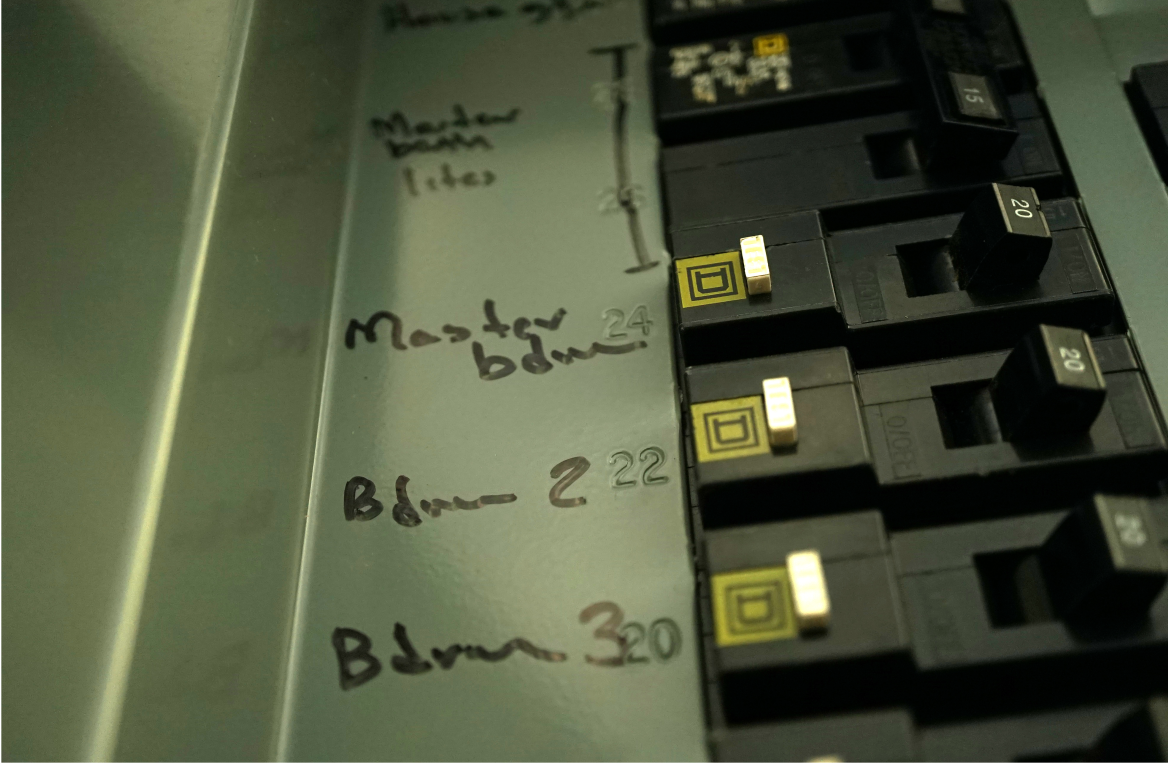
Almost every homeowner has done it. The power cuts out in one room, you walk to the panel, flip the breaker back, and get on with your day. If that happens once, fine. If you are doing it every week, your electrical system is trying to tell you something and it is worth listening.
A tripping breaker is not a malfunction. It is a safety device doing exactly what it was designed to do. The real question is what keeps pushing it past its limit.
The wire behind your walls can only carry so much current before it heats up. A 15 amp circuit is wired to handle 15 amps, and a breaker is the piece that shuts the circuit off before the wire gets hot enough to damage insulation or start a fire.
So when a breaker trips, it has just prevented a problem. Resetting it without understanding why is the equivalent of turning off a smoke alarm without checking for smoke. Do that repeatedly and you are removing the protection while leaving the cause in place.
This is the most common one by a wide margin. Too many devices are drawing power on the same circuit at the same time. The classic version is a kitchen where the microwave and the toaster run together, or a bedroom that is quietly hosting a space heater, a computer, and a window unit on one 15 amp circuit.
The tell is timing. If the breaker trips when you turn on a specific appliance, or when two particular things run at once, and it holds fine otherwise, you are almost certainly overloaded rather than faulted.
The fix is usually not a bigger breaker. Putting a 20 amp breaker on wire rated for 15 amps removes the protection and leaves the wire exposed, which is one of the more dangerous shortcuts we find in homes. The correct fix is redistributing the load or adding a dedicated circuit for the appliance that keeps causing it.
A short happens when a hot wire touches a neutral wire directly. Current takes the shortcut, spikes almost instantly, and the breaker cuts it off immediately.
Shorts tend to be dramatic. You may hear a pop, see a spark, notice a scorch mark, or smell something burnt near an outlet or switch. A short can be inside a damaged appliance cord, but it can just as easily be a failing device or damaged wiring in the wall.
If you suspect a short, leave the breaker off and get it looked at. This is not a wait and see situation.
A ground fault occurs when a hot wire contacts a grounded surface, such as a metal box, an appliance housing, or water. It is the fault type most likely to hurt someone, which is why code requires GFCI protection in kitchens, bathrooms, garages, basements, laundry areas, and anywhere outdoors.
If a GFCI outlet keeps tripping in a bathroom or on an exterior wall, moisture is a likely culprit. Outdoor receptacles that trip after every heavy rain usually have a failing cover, a cracked gasket, or water tracking into the box.
Breakers are mechanical. They have a finite number of trips in them and they age, particularly in panels that run warm or sit in a damp garage or crawl space. A breaker that trips at well below its rated load, or trips with almost nothing plugged in, may simply be worn out.
This one is easy to misdiagnose, because a tired breaker mimics an overload. It is also worth noting that a breaker failing early can be a symptom of a panel that is past its service life rather than a one off part failure.
Before calling anyone, there are a few things a homeowner can do without opening anything up.
What you should not do is remove the panel cover. The main lugs inside a residential panel stay energized even with the main breaker off, and that is where people get seriously hurt.
Call right away if you notice any of the following, and leave the breaker in the off position until someone looks at it.
If you smell burning or see smoke, shut the breaker off and call us at 980-785-1118. If it cannot wait for business hours, call 911 or your utility.
A proper diagnosis is not guesswork. We test the circuit under load, measure actual current draw against what the circuit is rated for, check terminations at the device and at the panel, and trace the circuit to find where the fault actually lives.
That distinction matters, because the symptom and the cause are often in different rooms. A breaker tripping in a bedroom can trace back to a loose neutral in a hallway junction box or a failing connection at the panel. Replacing the breaker in that situation solves nothing and costs you a service call.
Once we know the cause, you get a firm price before we start. Most electrical repairs and troubleshooting calls are resolved in a single visit.
Sometimes the circuit is fine and the panel is the issue. Homes built around Denver, Lincolnton, and Stanley in the 1960s through the 1980s were often wired with 60 or 100 amp service, which was reasonable for the appliances of the day. Add central air, a heat pump, a hot tub, a shop, or an EV charger and that service is working well past what it was planned for.
Warning signs that point at the panel rather than a single circuit include lights dimming when a large appliance starts, multiple breakers tripping across different circuits, a panel with no room left for new breakers, or a Federal Pacific, Zinsco, or Challenger label on the door. Those brands have a documented history of breakers failing to trip when they should, and most insurers now flag them.
In those cases the answer is usually an electrical panel upgrade rather than chasing individual circuits.
Our shop is on N NC 16 Business Highway in Denver, so we are close by when something goes wrong. We troubleshoot tripping breakers and other electrical faults throughout Lincoln, Catawba, Iredell, Gaston, and Mecklenburg Counties, including Lincolnton, Iron Station, Stanley, Mooresville, Cornelius, Davidson, and Huntersville.
If you are resetting the same breaker week after week, let us find out why. Call 980-785-1118 or request a free quote and we will get you on the schedule.