
Treats, No Tricks
FREE 10-Year Warranty
on any new standby generator
A $1,035 Value
or call 980-785-1118
Valid until October 31, 2026

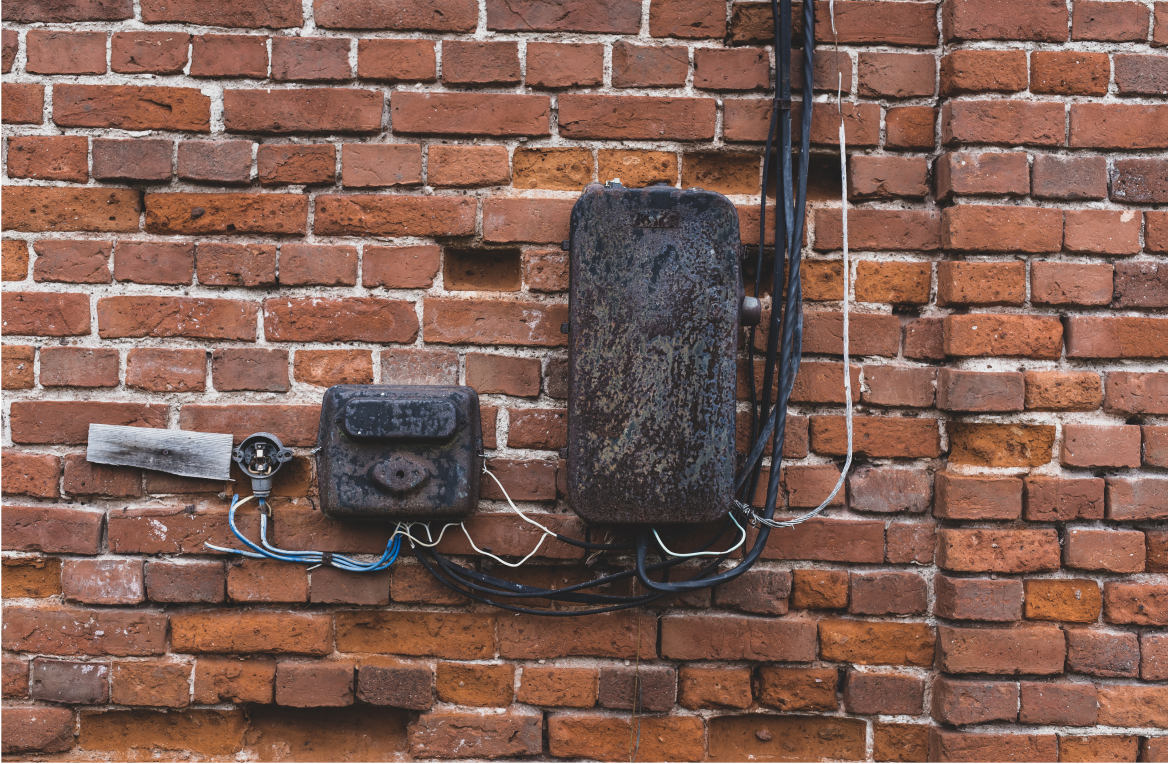
There is a lot of good older housing stock around here. Lincolnton, Denver, Stanley, and the established parts of Mooresville and Cornelius have homes built anywhere from the 1920s to the 1980s, and many of them are better built than what goes up today.
What they do not have is wiring designed for how we live now. A home wired in 1965 was planned for a couple of lamps, a television, and a refrigerator. It was not planned for a home office, a induction range, three televisions, a hot tub, and an electric car.
A home inspector will flag issues but is generally not an electrician, so the report tells you something exists without telling you how urgent it is or what it costs. Here is how we would rank the seven findings that come up most.
Seriousness: high. This is the ungrounded wiring used in homes built roughly before 1950, run on ceramic knobs with individual conductors. If it is still energized, it should be on your list.
Three problems. It has no ground, so nothing plugged into it has that protection. The insulation is rubber or cloth and after seventy plus years it is usually brittle and falling off. And it was never designed to be buried in insulation, which is exactly what happened when many of these homes were retrofitted with attic insulation, trapping heat around old conductors.
Most insurance carriers will not write a policy on a home with active knob and tube. If a seller tells you it is abandoned in place and not connected, that is worth verifying rather than taking on faith.
Seriousness: high, but often less invasive than people fear. Between roughly 1965 and 1973, copper prices pushed builders toward aluminum for branch circuits, the smaller wires feeding your outlets and switches.
Aluminum expands and contracts more than copper as it heats and cools. Over decades that works connections loose at outlets, switches, and splices, and loose connections generate heat. The failure point is almost always the termination, not the wire in the middle of the wall.
That is actually good news, because it means many homes can be remediated at the connections using approved connectors rather than rewired completely. That is a fraction of the cost and disruption of a full rewire. Whether your insurer accepts remediation varies, so it is worth asking them directly.
Do not confuse this with the aluminum service entrance cable feeding your panel, which is normal, still used today, and not a concern.
Seriousness: moderate. If outlets throughout the house have two slots rather than three, there is no equipment ground anywhere on those circuits.
The thing to watch for is the shortcut. Somebody swaps a two prong outlet for a three prong one so modern plugs fit, without actually running a ground. Now the outlet looks safe and is not, and anything with a surge protector plugged into it has nothing to divert a surge to. If you see three prong outlets in a house of that era, it is worth having a few tested rather than assumed.
Seriousness: high. Federal Pacific Stab Lok and Zinsco panels have a documented record of breakers failing to trip under overload, which defeats the entire purpose of the panel. Challenger panels raise similar concerns.
These are increasingly an insurance problem as much as a safety one. Carriers flag them, and some require replacement within a set window as a condition of coverage. We wrote a full explanation in our post on Federal Pacific and Zinsco panels if you want to identify what you are looking at.
A remaining fuse box is a related finding. Not inherently dangerous, but almost always undersized for a modern household and it invites the habit of putting an oversized fuse in to stop nuisance blowing.
Seriousness: moderate, and cheap to fix. Code requires ground fault protection anywhere water and electricity can meet: kitchens, bathrooms, garages, unfinished basements, crawl spaces, laundry, and all exterior receptacles.
Homes built before those requirements phased in usually have none of it. This is one of the least expensive corrections on the list and one of the most meaningful for safety, since ground faults are the fault type most likely to injure someone.
Seriousness: varies, sometimes the worst thing in the house. Wire nuts hanging in an attic with no junction box. A basement circuit run in lamp cord. A subpanel added without a ground bar. An outlet fed from a light fixture.
Unpermitted work is the wild card in older homes because there is no way to know what standard it was done to, and problems tend to cluster. Where you find one improvised repair you usually find several.
Pay particular attention if the listing mentions a finished basement, a converted garage, or an addition, and there is no permit history to match.
Seriousness: moderate, and increasingly a practical limit. Many homes in this area still run 60 or 100 amp service. That was adequate in its day and it is tight now.
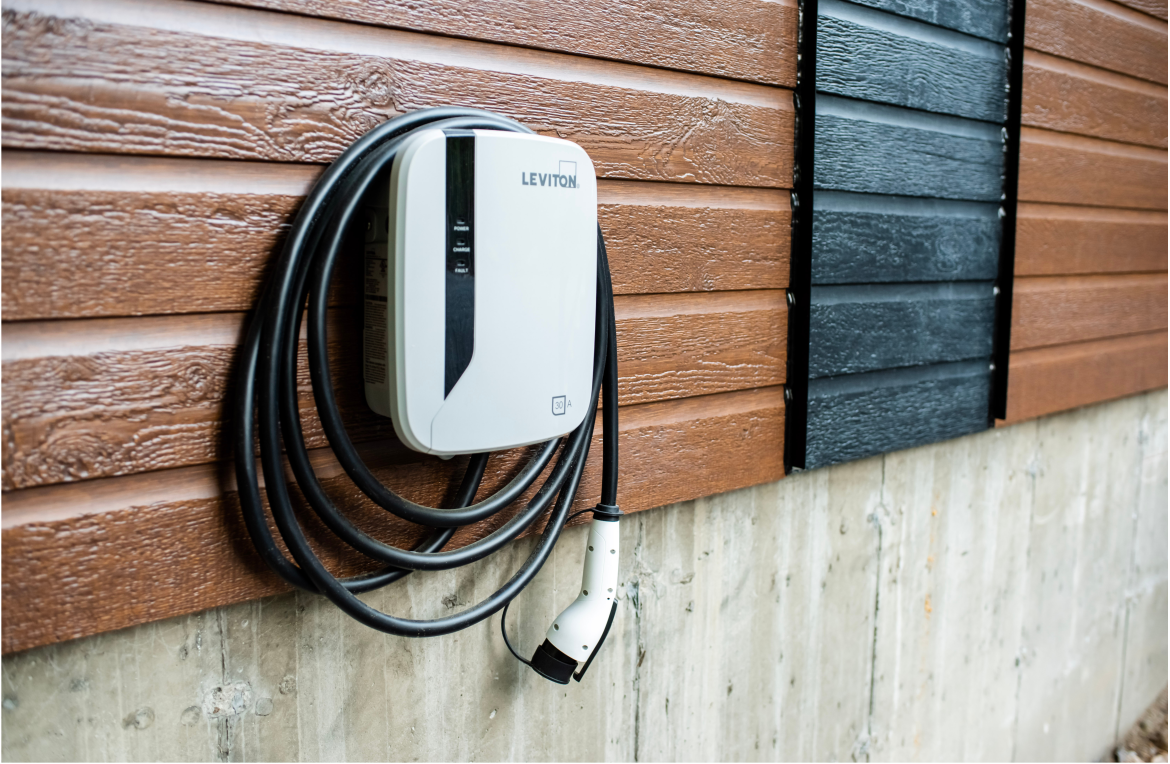
It becomes a real constraint the moment you want to add anything substantial: a heat pump, a hot tub, a workshop, a second oven, or an EV charger. If any of that is in your plans for the house, factor a service upgrade into your budget rather than discovering it later.
Look at the main breaker rating in the panel and at whether there is any open breaker space left. A panel that is completely full tells you something even before you check the amperage.
The report gives you leverage and a decision. In practice you have three moves: ask the seller to correct the items, ask for a credit and handle it yourself after closing, or accept it knowingly and budget for it.
What makes that decision hard is that inspection reports rarely include costs. That is where it helps to have an electrician price the list before your due diligence period runs out. We do this regularly for buyers around Lake Norman, and we price line by line so you can see which items are a few hundred dollars and which are a real number.
Not everything on a report needs to be done before you move in. Ungrounded outlets in a guest bedroom can wait. A Federal Pacific panel or active knob and tube generally should not, particularly if your insurance is conditional on it.
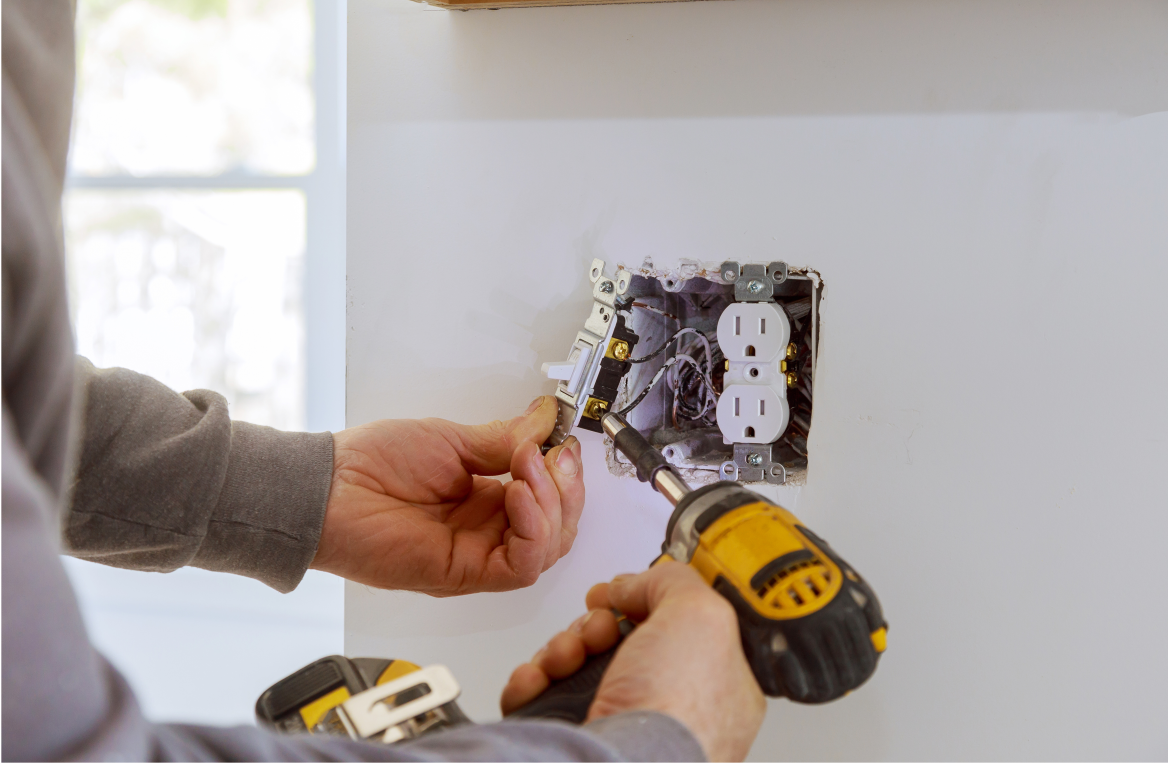
Most of what is on this list falls under rewiring and code corrections, and the panel items under panel upgrades. Adding grounded circuits and GFCI protection where there is none falls under new circuits and outlets.
All of it is permitted and inspected work, which matters here for a reason beyond safety. When the work is permitted you get documentation, and that paperwork is what satisfies an insurer or a future buyer. Unpermitted corrections just move the problem to your closing instead of theirs.
Our shop is on N NC 16 Business Highway in Denver, and we work throughout Lincoln, Catawba, Iredell, Gaston, and Mecklenburg Counties. If you are under contract and working against a due diligence deadline, tell us when you call and we will prioritize getting you a number in time to use it.
Call 980-785-1118 or request a free quote.