Treats, No Tricks
FREE 10-Year Warranty
on any new standby generator
A $1,035 Value
or call 980-785-1118
Valid until October 31, 2026

Power at the dock is not regular wiring. We wire boat lifts, dock receptacles, and lighting on Lake Norman with ground fault protection, proper bonding, and marine rated materials built to survive the water.

Dock electrical lives outdoors, over water, in constant humidity. It corrodes faster than anything else on your property, and the failure mode is far more serious than a tripped breaker.
Have it looked at right away if you see:
Dock wiring is one of the few places where a shortcut can cost someone their life. We use marine rated materials, we bond it properly, and we test it before we leave.



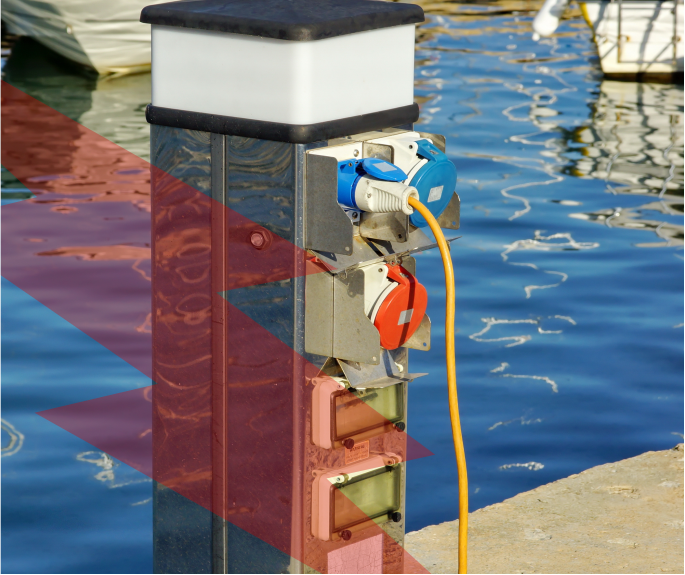
From a single lift circuit to a fully lit dock, we handle the whole run from the house to the water.
Every dock job starts with what is already there, because a lot of what we find was never installed to a marine standard.
We work the western and northern shores constantly, from Denver and Sherrills Ford to Terrell, Mooresville, Cornelius, and Davidson. Our shop is on N NC 16 Business Highway in Denver, minutes from the water, so dock calls do not sit for weeks.

What Lake Norman dock owners ask us most about power at the water.
It depends almost entirely on the distance from your panel to the dock and what you are powering. A lift circuit and a couple of protected receptacles is a moderate job. Running a new feeder several hundred feet down to the water and setting a small panel at the dock costs more. You get a firm price after we walk it.
Yes, in nearly every case. Running a new circuit or feeder to a dock is permitted work, and dock wiring gets attention from inspectors because of the safety risk. We pull the permit and meet the inspector so the work is documented as compliant.
It is what happens when alternating current leaks from dock or boat wiring into fresh water. The current can paralyze a swimmer within seconds, and there is often nothing visible to warn anyone. Fresh water lakes like Norman carry a higher risk than salt water. Ground fault protection and proper bonding are what prevent it, which is why we treat them as mandatory rather than optional.
Yes. We run the circuit, install the disconnect and controls, and make sure the motor is protected and properly grounded. We also troubleshoot lifts that trip breakers or run intermittently, which is usually a corroded connection or a failing motor rather than the control itself.
Yes. Receptacles at a dock require ground fault protection, and current code has tightened the requirements around marinas, boatyards, and docks considerably. If your dock predates those changes it almost certainly does not comply, and updating it is one of the highest value safety upgrades on the property.
Yes. That is one of our most common dock jobs. We size the feeder for the distance so voltage drop does not cause problems, bury or support it correctly on the way down, and typically set a small weatherproof panel at the dock so the circuits have local breakers and a disconnect.
If anyone swims off your dock, ground fault protection is not a nice to have. Have it tested before the season starts.
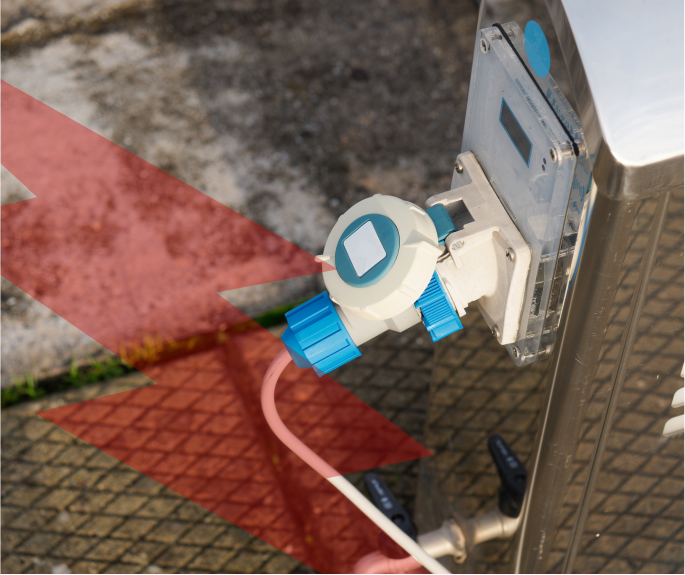
Electric shock drowning is the reason dock wiring gets treated differently from anything else on your property. When current leaks from faulty dock or boat wiring into fresh water, it travels through the water looking for ground. A swimmer who enters that field can lose muscle control almost immediately and drown without ever appearing to be electrocuted.
Fresh water carries a higher risk than salt water, which makes lakes like Norman exactly the environment where it happens. Most incidents trace back to the same handful of causes: a dock circuit with no ground fault protection, damaged or corroded wiring, missing bonding, or a boat plugged into shore power with a wiring fault of its own.
The fixes are well established. Ground fault protection sized for the dock, proper bonding and grounding, marine rated materials that resist corrosion, and a clearly marked way to kill power to the dock when people are in the water. We install all of it, test it, and show you how to check it yourself each season.