Treats, No Tricks
FREE 10-Year Warranty
on any new standby generator
A $1,035 Value
or call 980-785-1118
Valid until October 31, 2026

Pool and spa electrical is some of the most closely inspected work in the code book, and for good reason. We wire pumps, heaters, hot tubs, and lighting with the bonding and ground fault protection inspectors look for, and we carry it through inspection.
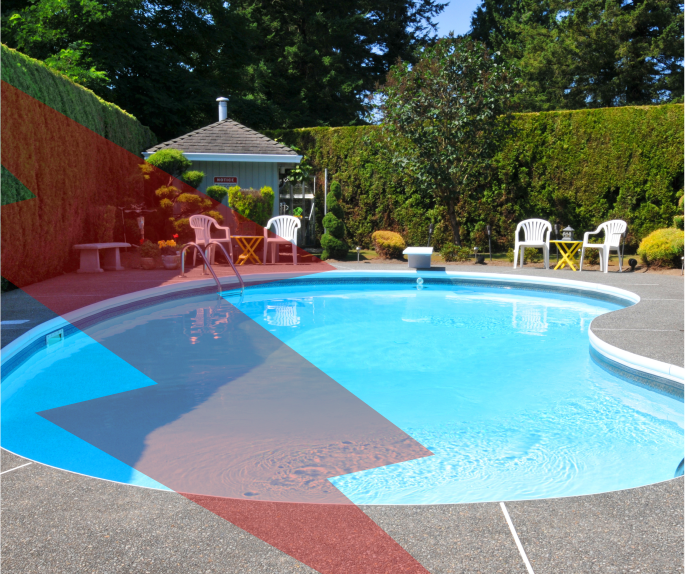
Everything about a pool works against electrical safety. Water, bare feet, metal, and equipment running constantly through every season. The code requirements around pools and spas are stricter than almost anywhere else in a home, and inspectors know exactly what to look for.
The requirements that catch people out:
A failed pool inspection stops the whole project, including the concrete and the water. We would rather get the bonding right the first time than come back and dig.



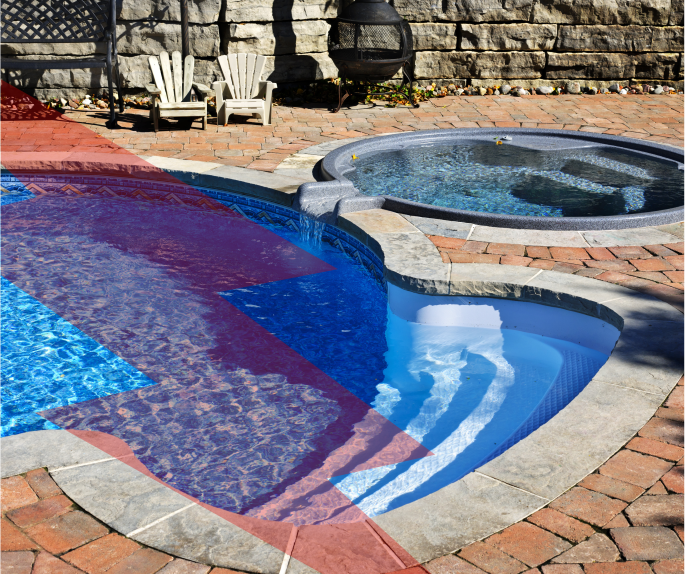
From a plug in spa to a full inground build, we handle the electrical side start to finish.
Timing matters on pool work. Some of it has to happen before concrete goes down and cannot be added later.
Backyard pools and spas have boomed across the Lake Norman area, and each county inspects them a little differently. Our shop is on N NC 16 Business Highway in Denver, and we wire pools and hot tubs throughout Lincoln, Catawba, Iredell, Gaston, and Mecklenburg Counties.

What homeowners and pool builders ask us most about pool and spa wiring.
The main variables are the distance from your panel to the tub and whether your panel has capacity for a 50 or 60 amp circuit. A tub near the panel with room in the service is a straightforward job. A tub across the yard from a full panel costs more because it may need a service upgrade first. You get a firm price up front.
Bonding ties all the metal around your pool or spa together with a heavy copper conductor, including the shell reinforcement, ladders, rails, pump housings, and nearby metal. It does not carry power. It keeps everything at the same electrical potential so there is never a voltage difference between two things a wet person can touch at once. It is the single most important safety element in pool electrical.
Code requires a disconnect that is readily accessible, within sight of the spa, and set back a minimum distance from the water so nobody can reach it from inside the tub. The exact placement depends on your layout, and it is one of the most common items inspectors fail. We set it correctly the first time.
Yes, always. Pool and spa circuits are permitted and inspected work in every county we serve. Bonding in particular is inspected before concrete is poured, because it cannot be verified afterward. We pull the permit and coordinate the inspection timing with your builder.
Yes. Above ground pools still require bonding of the pool structure and equipment, ground fault protected circuits for the pump, and correct receptacle placement. The requirements are lighter than an inground build but they are not optional, and plenty of above ground installs we are called to inspect have none of it.
Yes, and we prefer it. We work with pool contractors across the Lake Norman area, take the equipment list directly from them, and schedule our rough in around excavation and concrete so nothing holds up the build.
Bonding has to be inspected before the concrete goes down. If you are building this year, get the electrical scheduled early.
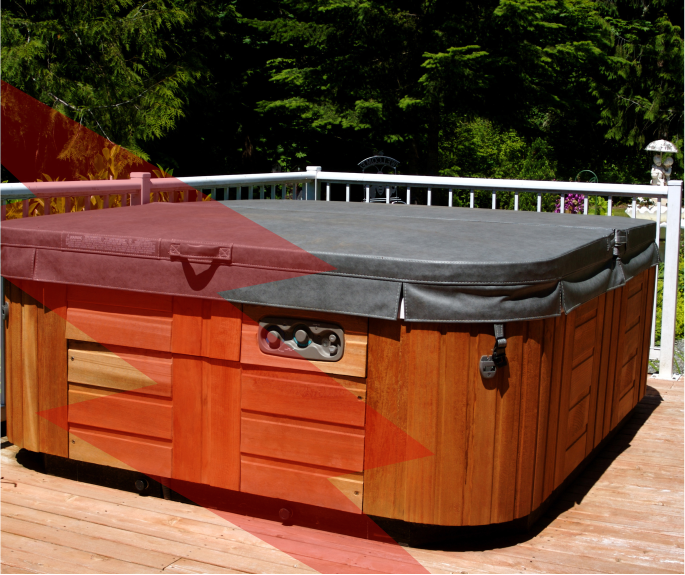
Most hot tubs sold today need a dedicated 50 or 60 amp 240 volt circuit with ground fault protection, usually fed to a small weatherproof spa panel that acts as the disconnect. Plug in tubs on a standard outlet exist, but they heat slowly and are the exception rather than the rule.
Three things decide what your install costs. The first is panel capacity, because a 50 amp continuous load is significant and older services often do not have room. The second is distance, since the run from the panel to the tub sets the wire size and the labor. The third is the surface the tub sits on, because a concrete pad with reinforcing steel has to be bonded into the grid.
We handle all three, set the disconnect at the correct distance, and carry the job through inspection so the tub is legal, safe, and covered if you ever have a claim.